



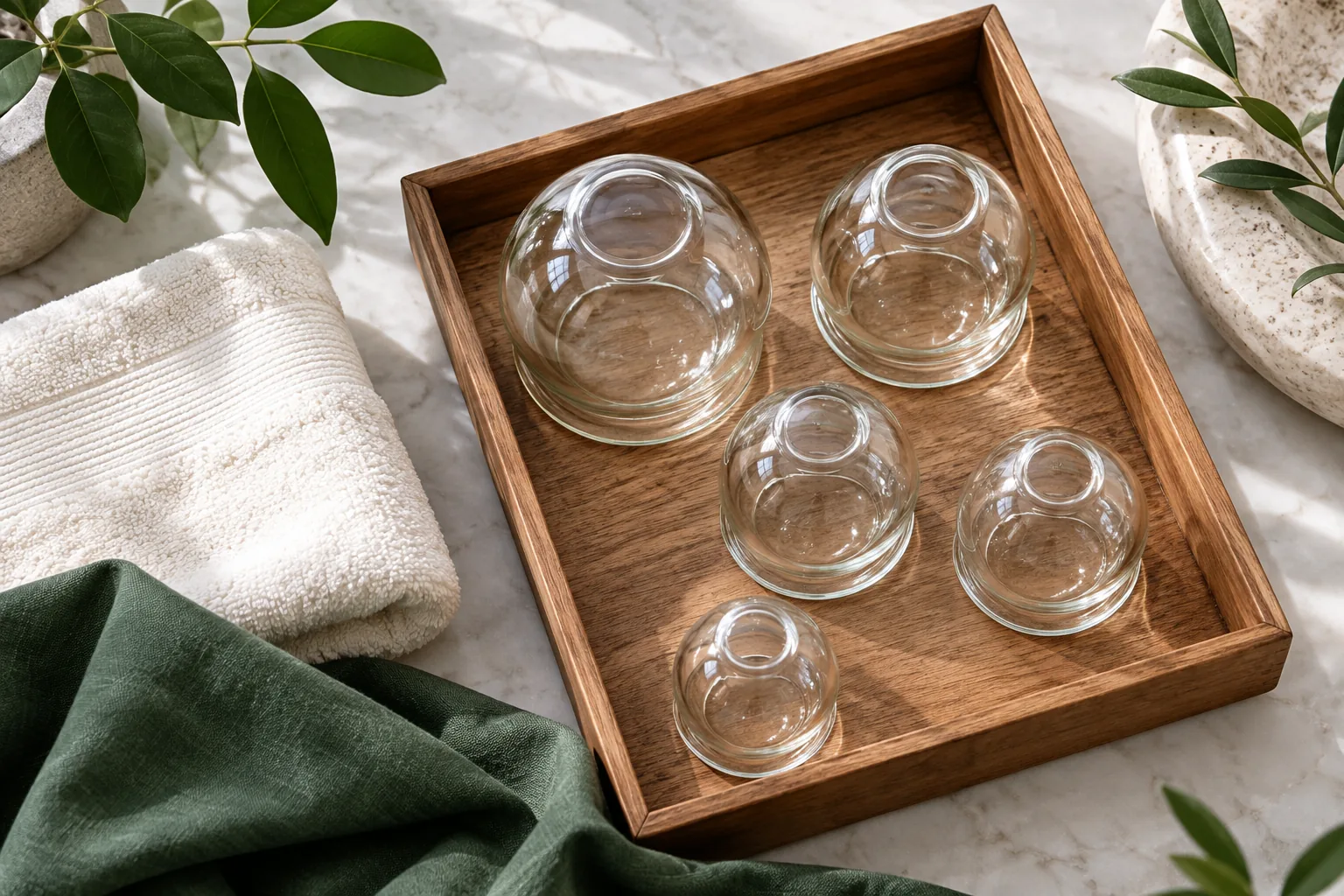
Dry cupping differs from forms involving skin incision. Understanding the method, evidence and risks matters more than mark colour, which does not diagnose disease or prove toxin removal.
Dry and wet cupping are different
Cups create suction on the skin. Dry cupping does not pierce it, while wet cupping involves incisions and blood. Clarify the proposed method and its suitability before agreeing; listing cupping as a service does not establish that every variant is available.
What the evidence allows
NCCIH notes that available evidence is weak. Possible relief for some pain does not justify claims to treat many diseases. Ask about a specific expected benefit, uncertainty and alternatives rather than broad assertions of cleansing or guaranteed recovery.
Risks deserve discussion
Skin marks, burns or infection can occur. Blood contact requires particular hygiene and infection-prevention precautions. Mention medication, pregnancy, skin concerns and bleeding problems, and ask which precautions are appropriate for you.

A mark’s colour is not a diagnosis
Suction marks do not prove toxins were present or that a disease was treated. Their colour should not guide medication changes or judgments about health. Persistent skin injury, worsening symptoms or signs of infection need appropriate assessment.
Choosing without pressure
You have the right to understand the procedure and risks, refuse it or choose an alternative. Do not stop prescribed treatment for cupping. PhysioFlex can clarify the available method and suitability.
Questions before consent
Ask which form is proposed, whether skin will be incised, what is single-use and how hygiene is managed. A service name or promotional image does not answer these questions. You are entitled to understand alternatives and the reasons for the choice before agreeing.
Do not compare photographs of marks
Marks vary with technique, area and individual factors. Comparing photographs does not measure treatment quality or diagnose illness. Persistent lesions or signs of infection need assessment rather than repeating cupping because of a mark’s colour.