



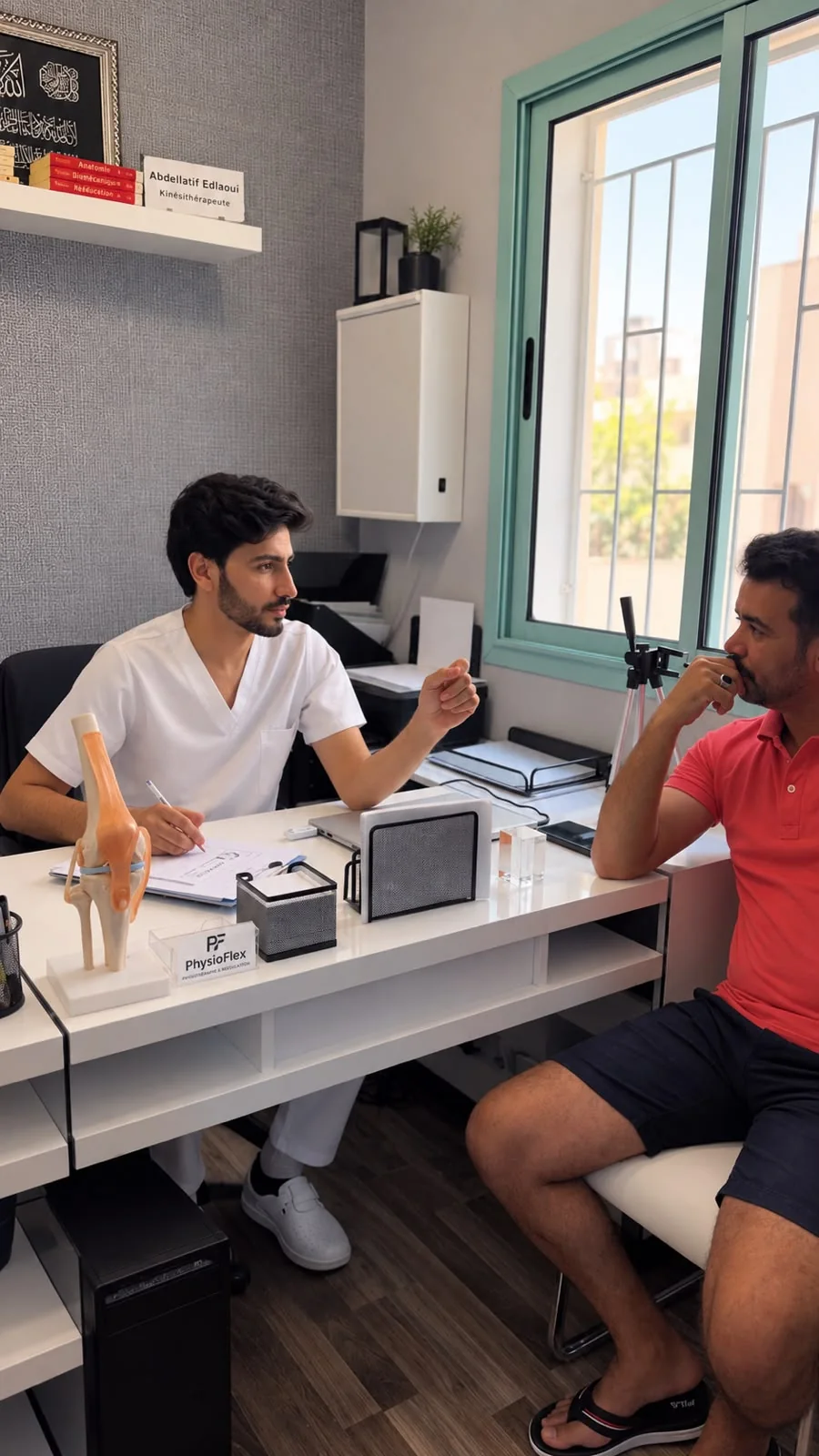
Prevention and rehabilitation of sports injuries for a gradual return to sport and performance. Assessment of movement and sporting demands to support a progressive, individual return to activity.
Each sport has different demands
Running, jumping and changing direction place different demands on the body. Your sport, level, training load and current difficulties shape realistic goals. Assessment considers the movements needed for safer participation as well as the painful area.
A graded return
Rehabilitation may progress from mobility, strength and balance to sport-related tasks. Load increases according to response and relevant functional criteria. Persistent pain or reduced performance calls for reviewing the plan rather than imposing a fixed return date.
Documented training
Abdellatif Edlaoui, founder of PhysioFlex, is a physiotherapist. His confirmed training includes a University Diploma in Sports Physiotherapy at UM6SS and the FIFA Diploma in Football Medicine. This training supports individual assessment without guaranteeing sporting or therapeutic outcomes.
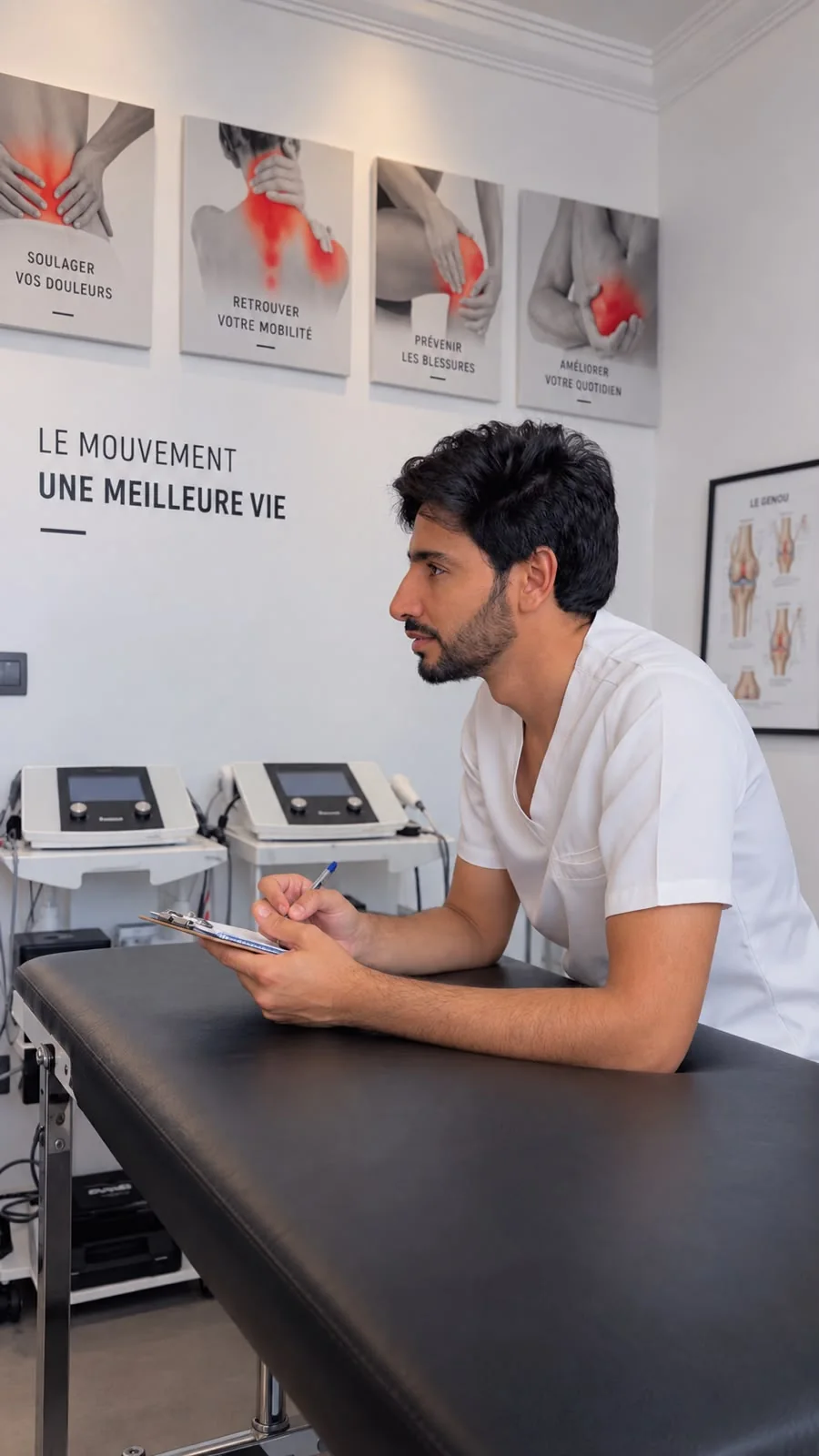
Connecting care to sporting demands
Tolerating straight-line running does not mean readiness for direction changes or contact. Discuss the tasks and participation level you are aiming for, from modified training to competition. The decision involves more than injury date or absence of pain.
Reviewing load with confidence
Training duration, intensity and next-day response help inform the next step. A coach can be involved with permission when coordination is useful. Contact PhysioFlex to describe your sport and goals; an appointment request does not promise a return date or performance level.